
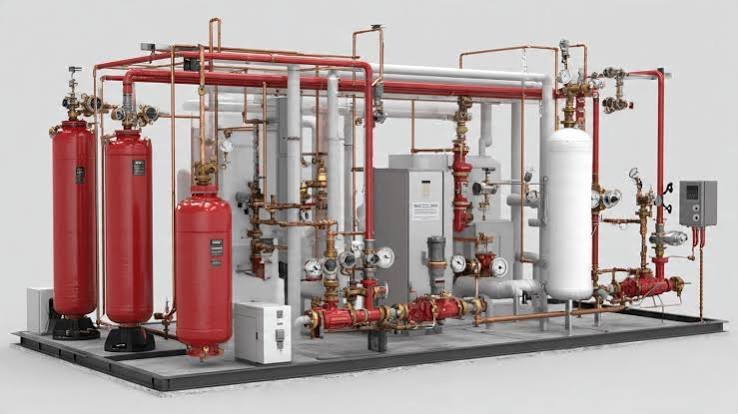
Fire risk in commercial and industrial buildings across Pakistan is rising every year as factories, data centers, hospitals, and high rise offices multiply in cities like Karachi, Lahore, and Islamabad. A single fire suppression system that protects only one room is no longer enough for facilities that have several critical areas under one roof. This is where a multi zone suppression panel becomes essential. It is the control brain of a modern fire suppression system in Pakistan, allowing several zones of a building to be monitored, detected, and protected independently from one centralized unit.
In this guide we will explain what a multi zone suppression panel is, how it functions, why Pakistani businesses are adopting it quickly, and what to check before buying one.
What Is a Multi Zone Suppression Panel
A multi zone suppression panel is a fire suppression control panel designed to manage multiple protected areas or zones within a single building using one control system. Instead of installing a separate control panel for every room or hazard area, a multi zone panel allows facility owners to connect detectors, releasing devices, and suppression agents for several zones to one central unit.
Each zone operates independently. If a fire is detected in the server room, the panel will trigger suppression only in that zone while leaving the electrical room, kitchen, or archive room untouched. This zone based approach saves money on agent refills, reduces false alarm disruption across the entire facility, and gives building managers a clear view of where a fire event has occurred.
How a Multi Zone Suppression Panel Works
The panel constantly monitors input from smoke detectors, heat detectors, and manual pull stations placed in each protected zone. When a fire condition is confirmed in a specific zone, the panel activates a sequence that usually includes an audible alarm, a visual warning light, a countdown delay for personnel to evacuate, and finally the release of the suppression agent into that exact zone.
Most panels used in fire suppression systems today support agents such as FM200, Novec 1230, or CO2 depending on the hazard class of the protected area. Facilities often integrate sprinkler and suppression systems together, and using components that are UL listed and FM approved ensures compliance with international standards while giving confidence in the reliability of the whole system. A well built panel logs every event with a timestamp so maintenance teams and insurers can review exactly what happened during an incident. Eispak
Why Multi Zone Panels Matter for a Fire Suppression System in Pakistan
Pakistan’s commercial and industrial sectors are growing fast, and many buildings now house data centers, telecom equipment rooms, generator rooms, archive storage, and commercial kitchens all under one roof. The demand for clean agent fire suppression systems in Pakistan is increasing rapidly because of the need for reliable protection in data centers, electrical rooms, server rooms, telecommunication facilities, control rooms, museums, banks, and healthcare facilities. Eispak
A single zone system cannot handle this variety of risk efficiently. A bank branch for example may need to protect its server room, its vault, and its cash counting area separately, each with different suppression needs. A multi zone suppression panel allows all three areas to be covered from one control unit while still isolating each risk. This reduces installation cost, simplifies wiring, and makes maintenance far easier for local technicians.
Key Features to Look for in a Fire Suppression Control Panel
When choosing a fire suppression system in Pakistan, the control panel is often the most overlooked component even though it is the most important one. Below are the features worth checking before purchase.
Zone capacity. Confirm how many zones the panel supports and whether it can be expanded later if the building grows.
Agent compatibility. The panel should support the type of suppression agent used in your facility whether that is a clean agent, CO2, or a wet chemical system for kitchens.
Detection integration. Look for compatibility with both smoke and heat detectors so the panel can differentiate between a real fire and dust or steam interference, which is common in Pakistan’s dusty urban environment.
Battery backup. Given the frequency of power outages in many Pakistani cities, a panel with reliable battery backup that can sustain the system for at least 24 hours is critical.
Remote monitoring. Panels with network or GSM based remote alerts let facility managers respond even when they are away from the site.
Local support and spare parts. Since these panels require periodic testing and occasional part replacement, buying from a supplier with local presence in Pakistan avoids long shipping delays for spares.
Where Multi Zone Suppression Panels Are Commonly Used
These panels are widely installed across several types of facilities in Pakistan.
Data centers and server rooms rely on multi zone panels to protect racks without damaging sensitive electronics, since clean agents leave no residue.
Banks and financial institutions use them to separate vault protection from general office areas.
Hospitals depend on multi zone systems to isolate operation theaters, pharmacy storage, and record rooms individually.
Telecom facilities and control rooms use them because downtime from a fire event can be extremely costly.
Commercial kitchens in hotels, restaurants, hospitals, and institutional catering facilities across Pakistan face a severe fire risk from high temperature cooking equipment and grease buildup in exhaust hoods, which is why kitchen hood suppression is often wired into the same multi zone panel as the rest of the building. MASC
Standards and Certifications to Check
Before installing any fire suppression system in Pakistan, it helps to understand the international codes that most reputable installers follow, even though Pakistan does not yet enforce a single unified national fire code.
Several NFPA standards are commonly referenced by fire protection professionals, including NFPA 10 for portable extinguishers, NFPA 13 for sprinkler system design, and NFPA 17 for dry chemical suppression systems used in industrial settings. Kitchen suppression systems are typically required to follow NFPA 96 and are increasingly specified by insurers as a condition of coverage. While these are American standards, they are widely used as a benchmark across Pakistan because local suppliers often import UL and FM approved equipment. State SystemsMASC
Asking your supplier whether the panel and its components carry UL listing or FM approval is one of the simplest ways to judge quality before signing a contract.
Installation Considerations for Pakistani Buildings
Older buildings in cities like Lahore and Karachi often were not designed with fire suppression wiring in mind, which makes retrofitting a bit more involved. A good installer will first conduct a hazard assessment of each zone, decide on an appropriate suppression agent for each area, then design the panel layout around the building’s existing electrical infrastructure.
Voltage fluctuation is another factor unique to many Pakistani cities, so installers usually recommend voltage stabilizers alongside the panel’s built in battery backup to avoid nuisance faults.
Climate also plays a role. In coastal cities like Karachi, humidity can affect detector sensitivity over time, so panels should be tested more frequently than the standard schedule recommends.
Choosing a Reliable Provider
Selecting the right partner matters as much as selecting the right equipment. A trustworthy provider will walk you through hazard assessment, agent selection, panel sizing, and ongoing maintenance rather than simply selling a box. If you are evaluating options for a fire suppression system in Pakistan, it is worth reviewing a dedicated resource such as the fire suppression system page on Flame Defender which outlines system types, components, and service options suited to local facilities.
Maintenance and Testing
A multi zone suppression panel is only as reliable as its maintenance schedule. Most manufacturers recommend a functional test at least once a year, with a full inspection of detectors, wiring, and agent cylinders. Battery backup should be checked every few months given the power situation in many parts of the country. Any zone that has triggered a discharge must have its agent cylinder refilled and pressure tested before the system is considered operational again.
Keeping a maintenance log tied to the panel’s own event history makes audits faster and gives insurers the documentation they usually ask for during policy renewal.
Frequently Asked Questions
What is a multi zone suppression panel used for?
It is used to control and monitor fire suppression across several separate areas of a building from a single unit, allowing each zone to detect and respond to fire independently.
How many zones can a fire suppression control panel support?
This depends on the model. Small panels may support four to eight zones while larger commercial panels can handle sixteen zones or more, with some being expandable.
What suppression agents work with a multi zone panel?
Common agents include FM200, Novec 1230, CO2, and wet chemical agents for kitchens, depending on what each protected zone requires.
Is a multi zone panel more expensive than a single zone system?
The upfront cost can be higher because of the added wiring and detection points, but it is usually cheaper overall than installing separate panels for each area of a large facility.
Do fire suppression systems in Pakistan need to follow NFPA standards?
Pakistan does not enforce a single national fire code, but most reputable installers follow NFPA guidelines and use UL or FM approved components to match international safety expectations.
How often should a fire suppression panel be tested?
Most panels require a full functional test annually, with battery and detector checks recommended every few months, especially in areas with frequent power outages.
Can a multi zone panel protect a server room and a kitchen at the same time?
Yes. Since each zone operates independently, a single panel can manage a clean agent system for a server room and a wet chemical system for a kitchen without interference between the two.
What happens if the power goes out during a fire event?
A properly installed panel includes a battery backup that keeps detection and suppression fully operational during a power outage, which is an important feature given the electricity situation in many Pakistani cities.
Are multi zone panels suitable for older buildings?
Yes, though retrofitting requires a hazard assessment first to plan wiring routes and agent storage locations that fit within the existing structure.
Where can I get a fire suppression system installed in Pakistan?
Several local providers offer design, supply, and installation services. It is worth comparing suppliers based on certification, local support, and spare parts availability before making a decision.
Final Thoughts
A multi zone suppression panel gives Pakistani businesses a practical way to protect several high value areas of a building without the cost and complexity of running separate fire suppression systems for each one. As commercial construction and data infrastructure continue to expand across the country, this kind of centralized, zone based control is quickly becoming the standard rather than the exception. Choosing the right panel, agent type, and installer will determine how well a building performs when it matters most.